
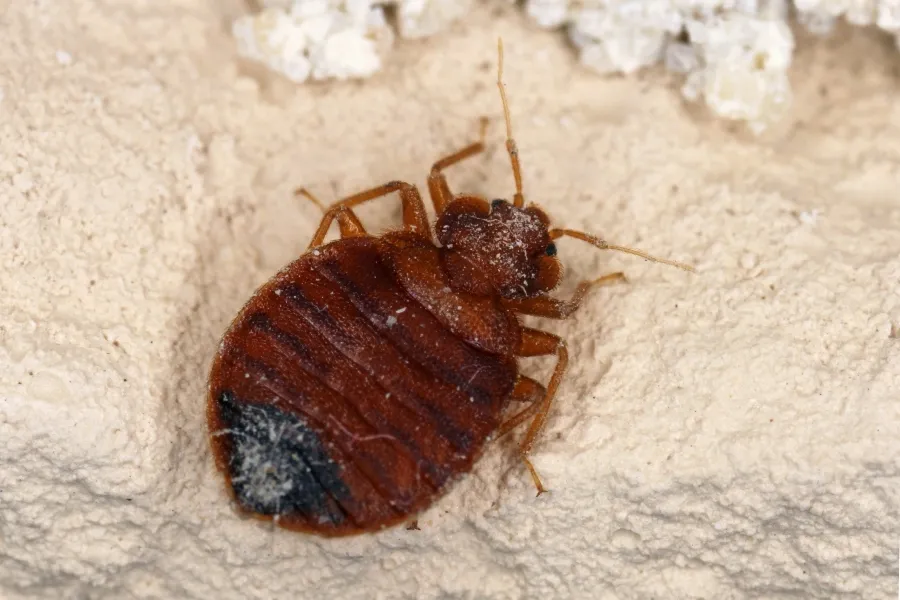
Identifying bed bugs early can help prevent a small problem from becoming a larger infestation. These insects have a distinct appearance that separates them from many other household pests. They are flat, reddish-brown insects with oval bodies that resemble an apple seed. They have three main body segments, six legs, and two antennae extending from the front of their heads. The key physical features used to identify bed bugs include:
- Color: Reddish-brown bodies that may become darker after feeding.
- Body Shape: Flat, oval-shaped bodies that can appear swollen or enlarged after a blood meal.
- Adult Size: Fully grown bed bugs typically measure about 5 mm long.
- Egg Appearance: Eggs are small, white, and oval-shaped, measuring around 1 mm in length.
Other Insects That Look Like Bed Bugs
It’s common to assume the worst when you spot a tiny insect crawling around your home. While bed bugs are a possibility, several other pests have similar appearances and can easily be mistaken for them. Here are some insects that are often confused with bed bugs:
- Ticks: Ticks have small, flat, wingless bodies that can sometimes be mistaken for bed bugs. Like bed bugs, they feed on blood and may leave behind itchy bite marks. However, ticks have eight legs, while bed bugs only have six. Ticks also attach themselves directly to a host for extended periods, unlike bed bugs, which hide in areas such as mattresses, furniture, and clothing.
- Fleas: Fleas are small, reddish-brown insects with oval-shaped bodies that may look similar to bed bugs. However, fleas are typically smaller, flatter, and more elongated. Their bites often appear in scattered clusters and may become noticeable quickly, while bed bug bites are commonly found in lines or zigzag patterns and may not appear for several days.
- Booklice: Booklice have long, narrow bodies with large heads and curved antennae, distinguishing them from bed bugs. Unlike bed bugs, they do not feed on blood. Instead, they are usually found in damp areas where they feed on mold, mildew, and other organic materials.
- Carpet Beetles: Carpet beetles can resemble bed bugs because of their shape, but they often have different coloring and very short antennae. Their larvae are easier to distinguish because they are fuzzy and resemble small caterpillars. Carpet beetles do not bite people, but their larval hairs can sometimes irritate skin and be mistaken for bed bug bites. They are commonly found in carpets, upholstery, and other areas where they feed on natural fibers.
How to Know If You Have Bed Bugs or Carpet Beetles
Carpet beetles and bed bugs are often mistaken for one another due to their small size and oval-shaped bodies. While they may appear alike at first, they have very different behaviors and habits. Understanding these differences is important when identifying a pest problem. Here is how they compare:
- Color: Carpet beetles can vary in color, including black, brown, yellow, or patterned appearances. Bed bugs are typically reddish-brown in color.
- Antennae: Carpet beetles have short antennae that are often difficult to notice. Bed bugs have more noticeable antennae near the front of their heads.
- Size: Carpet beetles are generally smaller than bed bugs. Bed bugs are flat, oval-shaped, and about the size and shape of an apple seed.
- Eyes: Bed bugs have visible eyes that can be seen up close. Carpet beetle eyes are much harder to see due to their small size and appearance.
- Larvae: Bed bug larvae have a longer, thinner appearance, while carpet beetle larvae look more like small, fuzzy caterpillars covered in tiny hairs.
How Big Do Bed Bugs Get?
A fully grown bed bug usually measures around 5 mm long and has a size similar to an apple seed. Their appearance may change depending on whether they have recently taken a blood meal. After feeding, their bodies may become more elongated, swollen, and red. Despite their ability to stay hidden, adult bed bugs can be seen without magnification.
Understanding the Bed Bug Life Cycle
Bed bugs progress through several stages of development before reaching adulthood. Each stage has different characteristics that can help with identification and understanding how infestations grow. The key stages of the bed bug life cycle are:
- Bed Bug Eggs: The bed bug life cycle begins when eggs are laid in hidden areas such as mattresses, furniture, cracks in walls, baseboards, and floorboards. These eggs are small, white, and oval-shaped, measuring about 1 mm in length.
- Bed Bug Larvae: After hatching, young bed bugs emerge from the eggs and begin the early stages of development. These immature bed bugs are very small and require blood meals to grow and move through their life stages.
- Bed Bug Nymphs: Nymphs look similar to adult bed bugs but are smaller and lighter in color. As they feed and grow, they shed their outer shell several times before reaching adulthood.
How to Identify Bed Bugs in North Carolina
Identifying bed bugs can be challenging because they closely resemble several other household insects. Their small size and ability to hide make them easy to overlook, so a magnifying glass may be helpful when inspecting for them.
When identification is uncertain, a professional bed bug exterminator can provide expert guidance and confirm whether these pests are present. Knowing what bed bugs look like can help prevent confusion with other insects.


