
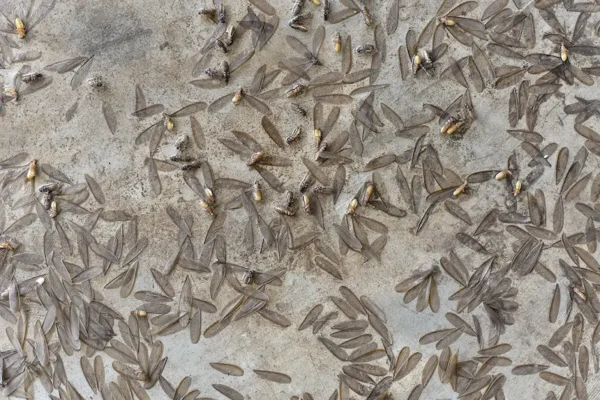
Termites rank among North Carolina’s most destructive and frequent pest threats. Every year, termite damage costs American homeowners billions in repairs and treatments. In our area, two primary termite species pose risks to homes: drywood termites and subterranean termites.
Identifying drywood termites early is key to preventing serious harm to your property. Look for signs such as termite swarms, tiny pellet droppings, and blistered or hollow-sounding wood. Recognizing these indicators can help you catch an infestation before it spreads.
As termite professionals with more than 62 years serving North Carolina homeowners, we’ve witnessed how drywood termites can quickly compromise a home’s structure and value. With over 62 years of experience, the termite specialists at Bug Out have the skills and knowledge needed to eliminate termite infestations and keep them from returning.
What Are Drywood Termites?
Drywood termites are stealthy pests that infest dry wood inside your home, unlike subterranean termites that require soil contact. They get the moisture they need solely from the wood they consume, which could be your attic beams, hardwood floors, or even furniture.
These termites vary in size depending on their role within the colony. Soldier termites are about three-eighths of an inch long, while reproductive termites can reach up to half an inch. Their coloration ranges from pale brown to yellowish or darker shades.
Drywood Termites vs. Subterranean Termites: Key Differences
The main distinction between drywood and subterranean termites lies in their habitat and moisture needs. Subterranean termites live underground and build mud tubes to access your home’s wood, requiring constant contact with soil moisture.
Drywood termites, on the other hand, live entirely within the wood above ground and don’t need soil at all. They can enter homes by flying through attic vents or tiny cracks near windows. Because of this, they can infest any wooden structure inside your home, from the attic to your hardwood furniture.
Additionally, drywood termites consume wood across the grain, carving smooth tunnels that weaken beams and other structural elements. Subterranean termites tend to eat along the grain.
Warning Signs of Drywood Termites in Your Home
- Seeing winged termites swarming is a clear sign of an established colony nearby, as these are reproductive termites seeking new places to nest.
- Look closely for small “kick-out holes” in wood where drywood termites expel pellet droppings. These pellets resemble tiny grains of rice and often accumulate beneath infested areas.
- Blistered or bubbled wood surfaces indicate tunneling just beneath the surface. Tapping on such wood may produce a hollow sound even if the exterior looks intact. Difficulty closing doors or windows can also signal termite damage.
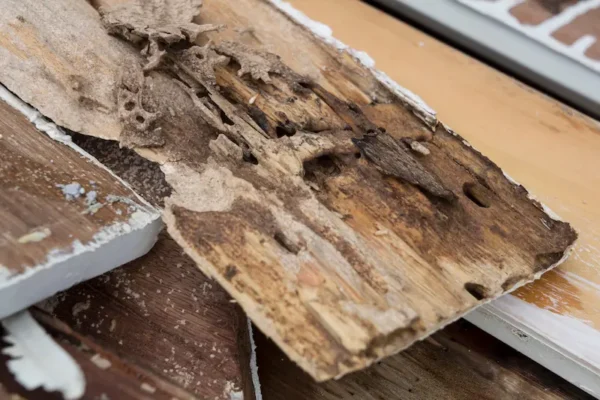
Drywood termites work silently inside wood, so visible damage often means they’ve been present for years. That’s why regular professional inspections are essential.
Why Are Drywood Termites Difficult to Eliminate?
Drywood termites are notoriously tough to eradicate because they nest deep inside wood, often in hidden or hard-to-reach spots like attic beams or wall cavities. Unlike subterranean termites, they don’t need to return to the soil, allowing satellite colonies to form in multiple parts of your home.
This makes treating the infestation more complex than simply applying surface sprays.
Effective Treatments for Drywood Termites
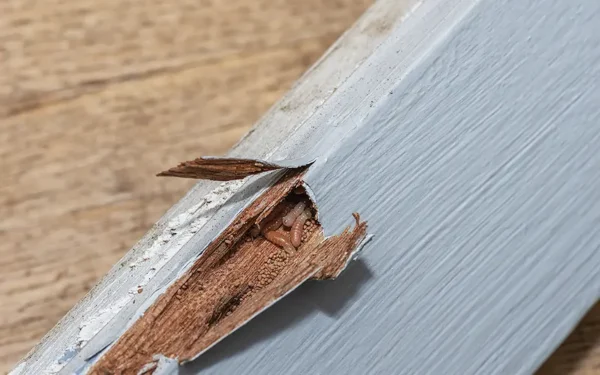
Treatment depends on the infestation’s size and location. For small, localized infestations (such as in furniture or door frames) we use targeted methods like injecting termiticides or applying expanding foam into termite galleries.
For widespread infestations affecting large portions of the home, fumigation is often the best solution. Though it requires temporarily vacating your home, fumigation ensures gas penetrates deep into all affected wood, eliminating termites throughout.
Our Approach to Drywood Termite Control
At Bug Out, our termite control process starts with a thorough inspection of your entire property. Our technicians are trained to identify all potential termite entry points and hiding places, from visible wooden beams to concealed spots behind fixtures.
Once we assess the infestation, we design a personalized treatment plan. Smaller infestations receive spot treatments, while extensive problems often require tent fumigation for complete eradication.
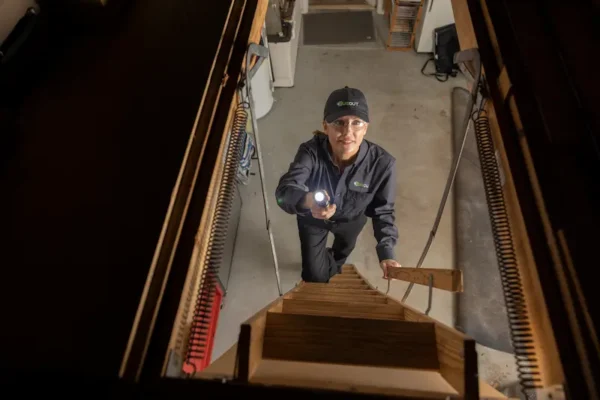
Our commitment continues with follow-up inspections to confirm treatment success and ongoing advice on preventing future termite activity, including sealing entry points and reducing conditions that attract termites.
Protect Your North Carolina Home with Bug Out
Drywood termites are a common pest problem here in North Carolina, and their ability to remain hidden for years makes them particularly concerning. Our termite experts understand the behaviors of these wood-destroying insects and use advanced tools to detect infestations early. At Bug Out, we employ the industry’s leading termite treatments, including liquid applications and baiting systems, to protect your home effectively.
Choosing the right pest control partner is vital when dealing with termites. Homeowners in North Carolina trust Bug Out because we prioritize protecting their most valuable asset: their home.
Don’t wait until termite damage threatens your property’s integrity and your peace of mind. Contact Bug Out today to schedule a professional termite inspection and safeguard your home from drywood termites.


