

Key Takeaways:
- A sudden increase in autumn spider sightings indoors is primarily driven by natural mating cycles and hunting habits.
- The vast majority of common indoor spiders found in North Carolina homes during the fall are ecologically beneficial and harmless to humans.
- Black Widows and Brown Widows are the primary dangerous species to watch out for in North Carolina, whereas Brown Recluses are exceptionally rare and not native to the state.
- Professional pest control manages indoor spider populations effectively by accurately identifying species and eliminating the underlying insect food sources that attract them inside.
Listen Now to Learn About Problem Spiders in the Fall Season
This audio covers all that you need to know!
5 Most Common Fall Spiders in NC
As temperatures cool in the fall, spiders often start appearing indoors more often. It stems from a combination of seeking shelter, increasingly scarce food supplies, and spiders’ natural mating behavior. When you see large or unfamiliar spiders inside your home, it’s natural to be concerned. But should you be worried?
We’re going to tell you about five of the most common fall spiders in North Carolina. The good news is that these spiders are relatively harmless. However, they can bite, so don’t try to pick one up:
In addition to spiders that seem to become more common in the fall, we’ll talk about venomous spiders in North Carolina that are actually dangerous.
Why Do Spiders Move Indoors in Fall?
As outdoor conditions get cooler and less hospitable, some species venture indoors in search of food and mates. Basements, garages, and cluttered storage areas provide perfect hiding spots. Also, fall is the mating season for many spiders.
The sudden spike in spider sightings this time of year doesn’t mean they’re “invading” your home, it means they’re looking for a place to survive.
#1) Wolf Spiders
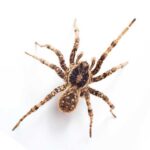 Appearance: Medium to large spiders. typically a mix of earthy brown, tan, and grey, featuring prominent dark vertical “racing stripes” running down their backs and banded patterns on their legs.
- Fall Behavior: Because they don’t spin webs, they hunt on foot. In the fall, large males actively roam indoors across floors and baseboards looking for mates.
- Risk Level: Low. While intimidating, wolf spiders are non-aggressive. A bite is rare—usually happening only if they are stepped on or trapped in clothing—and feels similar to a mild bee sting.
#2) Giant House Spiders
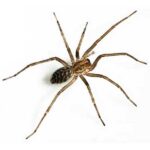 Appearance: Dark brown with long, hairy legs, sometimes spanning up to three inches wide.
- Fall Behavior: Giant house spiders build funnel-shaped webs in dark, undisturbed indoor areas like basements, garages, and dark corners, becoming much more active as autumn peaks.
- Risk Level: None. They possess no medically significant venom and are excellent at eating invasive household pests like ants and beetles.
#3) Bold Jumping Spiders
 Appearance: Small, relatively fuzzy, and black with a distinct white spot on their back and striking, iridescent green mouthparts.
- Fall Behavior: Unlike web-building spiders, these are active daytime hunters. In the fall, they frequently hop indoors through window screens, open doors, or cracks in brickwork to chase down late-season flies and gnats.
- Risk Level: Low. Their sudden, erratic jumping behavior can startle homeowners, but they are entirely harmless and prefer to hop away from humans.
#4) Yellow Sac Spiders
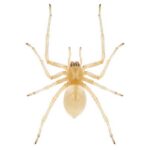 Appearance: Small (under a half-inch), pale yellow or light translucent green.
- Fall Behavior: Instead of prominent webs, they build small, silken, tube-like tents where the wall meets the ceiling or behind furniture to rest in during autumn nights.
- Risk Level: Low to Medium. Yellow sac spiders are responsible for a significant percentage of indoor spider bites because they get trapped in bedding or clothes. The bite can be sharp and painful, occasionally causing localized swelling, but it is not dangerous.
#5) Fishing Spiders
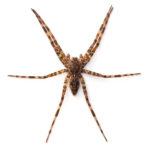 Appearance: Fishing spiders are very large, mottled brown and grey, often confused with wolf spiders.
- Fall Behavior: While they prefer living near water sources, they routinely wander into North Carolina basements, crawl spaces, and ground floors during the autumn months.
- Risk Level: Low. They prefer to flee rather than bite. If cornered, their bite may pinch but carries no dangerous toxins.
Which Spiders Are Dangerous?
While most spiders you encounter in the fall are harmless, a few species in the United States are venomous and should be treated with caution:
| Key Identification Marks | Common Autumn Hiding Spots | Venom Severity | |
| Black Widow | Shiny black body with a distinct, bright red hourglass marking on the underside of the abdomen. | Cluttered areas, dark corners of garages, crawl spaces, and undisturbed basements. | High. Venom attacks the nervous system. Can cause severe muscle cramps, intense pain, and nausea. |
| Brown Widow | Tan, brown, and grey mottled body with a bright orange hourglass. They lay distinctive, spiked egg sacs. | Attached to the undersides of indoor/outdoor patio furniture, storage bins, and garage entryways. | Medium-High. While their venom is potent, they inject less of it than Black Widows and are more timid. Bites still require medical evaluation. |
| Brown Recluse (Not Native to NC) | Uniform light brown with a dark, violin-shaped mark on its back. (Note: Exceptionally rare in NC) | Undisturbed storage boxes, attics, or shoes left in dark closets. | High. Can cause localized necrotic tissue damage (skin lesions) requiring immediate medical intervention. |
If you believe you’ve spotted one of these spiders, do not approach it. Call a professional promptly for safe removal, and seek medical attention right away if you’re bitten.
Should You Call an Exterminator for Fall Spiders?
Spiders play an important role in controlling insects, but nobody wants an infestation indoors, especially if you’re worried about a dangerous species. Professional spider control offers:
- Proper identification of spider species
- Safe removal of venomous spiders
- Treatment plans that reduce indoor pest activity (and food sources for spiders)
- Long-term prevention to keep them from returning
Keep Your Home Protected This Fall
Throughout the fall, spiders are highly likely to move indoors, so it’s important to know which species could pose a threat. Bug Out provides expert spider identification, removal, and prevention services to give you peace of mind.
Contact Bug Out today for professional spider control to keep your home safe this fall.