
Key Takeaways
- Termite damage looks like hollowed wood, cracks in walls, beams, or rafters, roof damage, or warped floors.
- Wood structures and materials are damaged by termites, such as floors, walls, sheds, lumber, and decks.
- Termites damage wood because they contain a material called cellulose.
- You can spot termite damage in both indoor and outdoor areas, wherever there is wood.
- There are termite-resistant materials you can use, including treated lumber, cement, concrete, and metal.
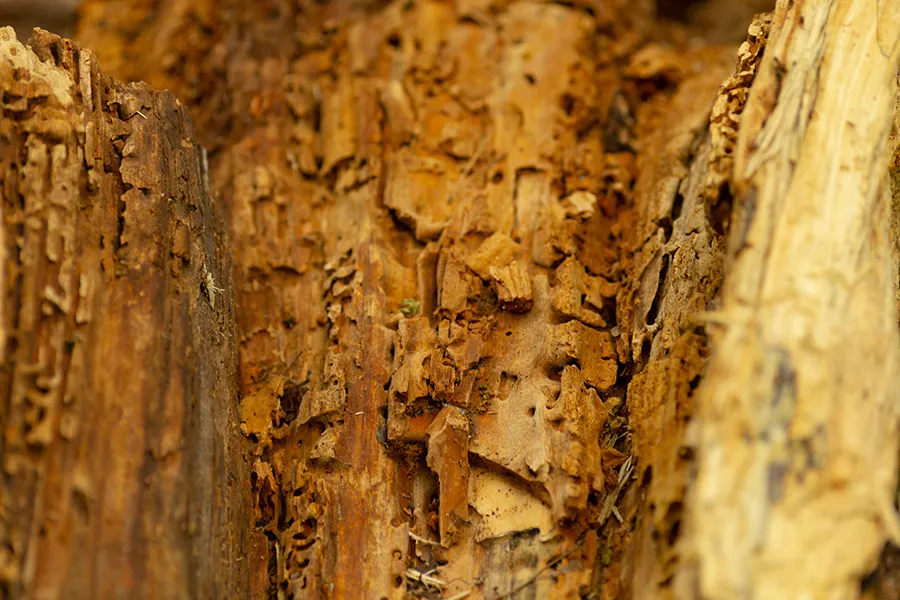
As termites chew through wood to feed on cellulose, the material becomes weak, brittle, and hollow. Outdoor woodpiles infested with termites often appear riddled with tunnels, as if they’ve been carved from the inside out.
Sometimes you’ll notice wood shavings and splintered surfaces as termites chew through. With long-term infestations, wood may appear warped or bent, often resembling water damage. No matter the signs, visible termite damage usually means the infestation has been severe.
What Termite Damage Looks Like
Termite infestations often reveal themselves through damaged wood, which can look hollowed out or tunneled. This damage weakens the structure and can lead to costly repairs if left untreated. The damage may appear as follows:
- Sticky Entryways: Doors and windows that stick or won’t close properly
- Structural Cracks: Cracks appearing on interior walls, ceiling beams, or rafters
- Roof Damage: Roof tiles that are cracked or broken
- Hollow Wood: Floorboards and baseboards that feel weak or hollow
- Floor Warping: Sagging or bubbled sections in the floorin
What is Damaged By Termites?
Wood in contact with soil is a prime target for termites, especially subterranean species. In North Carolina, termites can infest structures both inside and out. Common targets include:
- Support beams
- Flooring
- Posts
- Wall studs
- Insulation
- Sheds
- Lumber
- Wooden decks
- Outdoor furniture
Why Do Termites Damage Wood?
Wood contains cellulose, which termites rely on to survive. Structures with wood-to-soil contact face a higher risk of infestation. Because most homes are made of wood, they’re naturally attractive to termites. Once inside, termites can remain hidden for long periods while causing significant structural damage.
Where to Spot Termite Damage Around My Home?
Termites work silently within your home’s framework. They often go undetected for months or even years. Over time, their activity leads to noticeable signs of damage in different areas of the house:
Indoor Areas
- Walls
- Ceilings
- Slabs
- Foam Insulation
- Windows
- Flooring
- Tiling
- Drywall
Outdoor Areas
- Piles of Firewood
- Roof Tiles
- Patio Furniture
- Decaying Logs
What are Termite-Resistant Materials?
Termites are famous for infesting wood, but what about metal or other common building materials? Fortunately, some materials, including certain types of wood, are naturally resistant to termites. Here are some of the most termite-resistant materials used in construction:
- Treated Lumber: Lumber that has been treated is less prone to rot and becomes unappealing to pests, which is why it’s commonly used in new construction.
- Cement and Concrete: These materials are too dense and lack cellulose, so termites won’t eat through them. However, they can enter through small cracks or gaps in concrete.
- Redwood and Cedar: Both types of wood offer some natural resistance to termites, but if they begin to decay, they can still attract infestations.
- Metal: Since metal contains no cellulose, termites have no interest in it and will not attempt to infest it.
Prevent Termite Damage in Your North Carolina Home
Ignoring termite activity can lead to extensive and expensive repairs. Termites thrive in hidden, dark spaces and can spread rapidly throughout your property. If you suspect termites in North Carolina, the best defense is to call the professional termite exterminators at Bug Out.


