
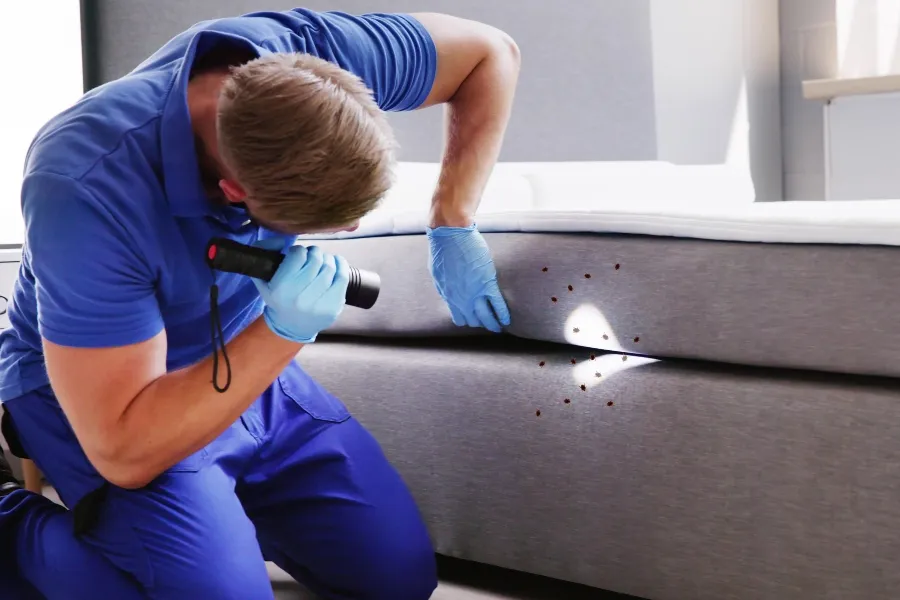
You may be dealing with bed bugs if you find evidence such as dark spots on sheets, small reddish marks, or tiny eggs in hidden areas. Learning how to recognize these warning signs and check for bed bugs while traveling can help prevent an infestation before it begins.
When it comes to eliminating bed bugs, expert help can make all the difference. Bug Out offers professional treatments and prevention strategies designed to locate, manage, and reduce bed bug activity in your home.
Common Signs of Bed Bugs
Recognizing the early warning signs of bed bugs can help prevent a small problem from becoming a larger infestation. One of the most commonly reported signs is bed bug bites, which may cause itchy, red marks for some people, while others show no reaction. Other signs of bed bugs include:
- Dark Fecal Spots: Small dark spots on bedding, mattresses, or other areas may be bed bug droppings left behind where they hide or feed.
- Blood Stains: Small blood marks on sheets or bedding can appear when bed bugs are crushed after feeding during the night.
- Shed Skins: Bed bugs shed their outer skins as they grow, and these discarded shells may be found near hiding areas.
- Eggs and Eggshells: Tiny white bed bug eggs or empty eggshells may be found in mattress seams, furniture, cracks, and other protected spaces.
- Bite Marks: Red, itchy marks on the skin may occur after bed bug bites, although some people may not have a noticeable reaction.
- Musty Odor: A strong, unpleasant musty smell may develop in areas with larger infestations due to bed bug scent glands.
How Dangerous Are Bed Bugs?
Bed bugs are considered a nuisance pest rather than a serious health threat. While they are parasitic insects that feed on blood and can cause red, itchy bites, they are not known to create the same health concerns associated with some other pests. Even so, dealing with bed bugs can be extremely frustrating for homeowners.
An infestation can affect your quality of life by interrupting sleep, creating stress, and causing concern about whether the pests may return. The emotional impact of a bed bug problem is often one of the biggest challenges homeowners face.
How to Inspect Your Home for Bed Bug Activity
If you suspect bed bugs may be in your home, inspecting your property carefully can help uncover additional signs. Knowing where to look can make it easier to find hidden activity before the problem grows. Start with these inspection tips:
- Inspect the Mattress: Remove your bedding and carefully check the edges, seams, folds, and crevices of your mattress for signs of bed bug activity.
- Look for Bed Bug Evidence: Search for live bed bugs, eggs, nymphs, shed skins, or other signs that may indicate an infestation.
- Check the Box Spring: Examine the box spring closely, especially around seams, corners, and hidden areas where bed bugs may be hiding.
- Search Other Hiding Areas: Inspect additional locations throughout your home, including upholstered furniture, cracks, crevices, and areas around power outlets where bed bugs may shelter.
How to Identify a Bed Bug Infestation in North Carolina
Seeing possible signs of bed bugs can raise an important question: Do you have a few pests or a larger infestation? Whether you notice bites, dark spots on sheets, or live bed bugs, even a small discovery should be taken seriously.
Having your North Carolina home inspected by a bed bug professional is the best way to confirm activity and begin treatment. Expert removal methods can help address the problem quickly and reduce the chance of the infestation spreading.


