
Key Takeaways:
- Identifying the specific cockroach species is essential because different types require completely different treatment approaches.
- Cockroaches in North Carolina generally fall into two categories: persistent indoor pests that breed inside, and outdoor scavengers that only enter homes by accident or for resources.
- The German cockroach is the most destructive and severe indoor pest due to its rapid reproduction rate, resistance to DIY treatments, and severe health risks.
- Unlike most species that require high moisture and stick to kitchens or bathrooms, some types can thrive in dry areas and spread throughout the entire house.
- Professional extermination is highly recommended for indoor infesting species before they can multiply exponentially.
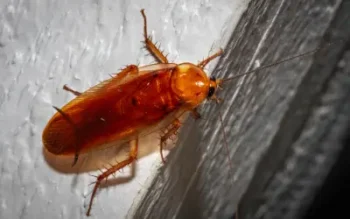
So you’re sure you’ve found roaches in your home, but do you know which kind they are? Identifying the species on your property is the first step to narrowing down the source of your infestation and preventing problems down the line. Because different roach species require completely different treatment approaches, getting it right matters.
Here are the most common roaches you might encounter in North Carolina:
American Cockroach
Often referred to as the “palmetto bug,” the American cockroach is the largest house-invading species in the United States. They prefer warm, dark, and highly humid environments. While they primarily live outdoors in sewers, crawl spaces, and mulch beds, they will readily migrate indoors into kitchens, bathrooms, and basements in search of food and water.
- Size: Approximately 1.5” to 2” long.
- Color: Reddish-brown with a distinct, yellowish figure-8 pattern on the back of their heads.
- Flight: Strong fliers; both males and females have fully developed wings and will fly when startled or in warm weather.
- Habitat: Basements, sewers, steam tunnels, crawl spaces, and around drainage systems.
German Cockroach
 The German cockroach is the most disruptive and invasive indoor pest in North Carolina. Unlike outdoor species that wander inside by accident, German cockroaches are strictly indoor pests that rely entirely on human habitats to survive.
They are notorious for hitchhiking into homes inside cardboard boxes, grocery bags, or secondhand appliances, and they multiply exponentially faster than any other species.
- Size: Small, usually 1/2 to 5/8 of an inch long.
- Color: Light brown to tan with two dark, parallel vertical stripes running down the plate behind their head.
- Flight: They have wings but cannot fly; they travel strictly by running incredibly fast.
- Habitat: Strictly indoors, concentrated heavily in kitchens and bathrooms near heat and moisture (behind refrigerators, inside cabinets, and under sinks).
Smokybrown Cockroach
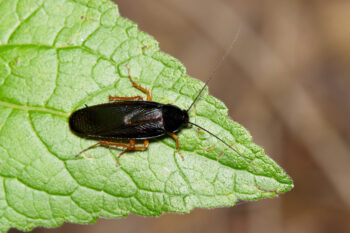 The Smokybrown cockroach is an outdoor scavenger that is incredibly common in the green spaces, pine trees, and thick mulch beds of North Carolina. They lose moisture quickly, meaning they require constant access to water. They frequently fly onto roofs and enter homes through attic vents, eaves, or poorly sealed window screens during dry spells.
- Size: Large, typically 1 to 1.5 inches long.
- Color: Uniform, glossy dark mahogany brown to almost solid black, with no light markings.
- Flight: Excellent, strong fliers that are highly attracted to outdoor porch lights at night.
- Habitat: Attics, gutters, tree holes, mulch, and woodpiles.
Oriental Cockroach
 Sometimes mistaken for “waterbugs,” Oriental cockroaches are sluggish, ground-dwelling pests. They are heavily dependent on high-moisture environments and prefer cooler temperatures than other roach species. Because they cannot climb smooth vertical surfaces well, they are almost always found at ground level or underground, feeding on decaying organic matter.
- Size: Around 1 inch long with a distinctively wide, robust body.
- Color: Shiny, greasy black or very dark brown.
- Flight: Flightless; males have short wings that don’t cover the abdomen, and females only have small wing pads.
- Habitat: Cool, damp, dark places like crawl spaces, basements, floor drains, and under porches.
Asian Cockroach
The Asian cockroach is a relatively recent invader to the Southeast and looks almost identical to the German cockroach. However, their behavior is entirely different. Asian cockroaches live strictly outdoors in leaf litter and grass. They do not tolerate indoor environments and will only enter your home by accident—usually because they were flying toward your TV or indoor light fixtures at night.
- Size: Small, 1/2 to 5/8 of an inch long.
- Color: Light brown to tan with two dark parallel stripes on their back (identical to the German roach).
- Flight: Strong fliers; they take to the air easily, especially at dusk.
- Habitat: Outdoors in shaded mulch, tall grass, and leaf litter; heavily attracted to bright light sources.
Brown-Banded Cockroach
The Brown-banded cockroach is one of the smallest invasive species. Unlike most other cockroaches, they do not require high levels of moisture to thrive. Because they prefer warm, dry locations, they tend to scatter throughout an entire home rather than staying confined to kitchens or bathrooms.
- Size: Small, roughly 1/2 inch long.
- Color: Light brown with two prominent, lighter-colored bands running horizontally across their wings and abdomen.
- Flight: Males are capable of flight when disturbed; females have shorter wings and cannot fly.
- Habitat: High up on walls, inside upper cabinets, behind picture frames, and hidden inside warm electronic appliances (like TVs and computers).
Compare Common Cockroaches in NC
| Roach Species | Primary Visual Identifier | Preferred Location | Danger Level |
| German Cockroach | 2 dark parallel head stripes | Kitchens & Bathrooms | Severe (Multiplies rapidly, major health/sanitation hazard) |
| American Cockroach | Huge size; yellow figure-8 on head | Basements & Crawl spaces | Moderate (Spreads bacteria, but manageable indoor breeding) |
| Smokybrown Cockroach | Solid, glossy mahogany brown | Attics, Gutters & Mulch | Moderate (Mainly an outdoor pest, enters for water) |
| Oriental Cockroach | Greasy, shiny black; wide body | Basements & Floor drains | Moderate (Carries bacteria, strongly tied to high moisture) |
| Brown-Banded Cockroach | Horizontal light brown body bands | High walls, Furniture, Electronics | High (Breeds indoors, harder to track down due to lack of moisture need) |
| Asian Cockroach | Identical to German, but flies to light | Shaded yards & Leaf litter | Low (Accidental invader, cannot survive or breed indoors) |
What Are the Worst Cockroaches to Have in Your House?
Among the various species, German cockroaches are by far the worst to find in your home. While species like the American or Smokybrown cockroach might wander inside looking for water, German roaches are persistent indoor residents.
They reproduce exponentially faster than other species—with a single female capable of producing thousands of descendants in one year. Furthermore, they are highly resilient to DIY sprays, hide in microscopic crevices, and cause significant health issues by contaminating food and spreading bacteria like Salmonella. If you think you might be dealing with German roaches, we strongly recommend calling a cockroach exterminator as soon as possible.
Check out our expert tips on how to get rid of cockroaches in your home.
More Cockroaches You Might Find in NC
While the species above represent the most common household nuisances, North Carolina’s warm climate and rich woodland ecosystems are home to several other native and introduced roaches. These species rarely cause indoor infestations and are generally considered harmless outdoor or nuisance pests:
- Wood Cockroach (Parcoblatta spp.)
- Cuban Cockroach (Panchlora nivea)
- Field Cockroach (Blattella vaga)
- Brown-Hooded Cockroach (Cryptocercus punctulatus)
- Surinam Cockroach (Pycnoscelus surinamensis)
Call Us for Cockroach Control in North Carolina
Identifying the specific cockroach species on your property is the most critical step in reclaiming your home. Whether you are dealing with a solitary outdoor wanderer or a rapidly multiplying indoor infestation like the German cockroach, treating the problem quickly and correctly is essential to protecting your family’s health and safety.
Think you might have a roach infestation? Don’t wait for it to multiply. Contact Bug Out today for a comprehensive inspection and a targeted, effective elimination plan.


